25 Fascinating Facts About Poland: From Castles to Cuisine

Ever wonder what makes Poland so interesting, well, besides its love for football or soccer as known in the USA- and the well known pierogi?
The nation’s identity is closely tied to its past, from the establishment of its first monarchy in the 10th century to the pivotal moments it faced during the World Wars.
And every city has its own story.
What many might not know about Poland is that it has troves of interesting tidbits.
For instance, it was the second country in the world to adopt a written constitution and was home to the world’s tallest structure for a period.
Poland is also the ninth largest country in Europe.
But there’s more, so read on for 25 more facts about Poland:
25 Facts About Poland
1. Poland is home to the world’s biggest castle
Poland boasts the largest castle in the world by land area, the Castle of the Teutonic Order in Malbork.
Constructed in the 13th century as a fortress and headquarters for the Teutonic Knights, this expansive castle is also recognized as a UNESCO World Heritage Site.
2. Poland has one of the oldest restaurants in Europe
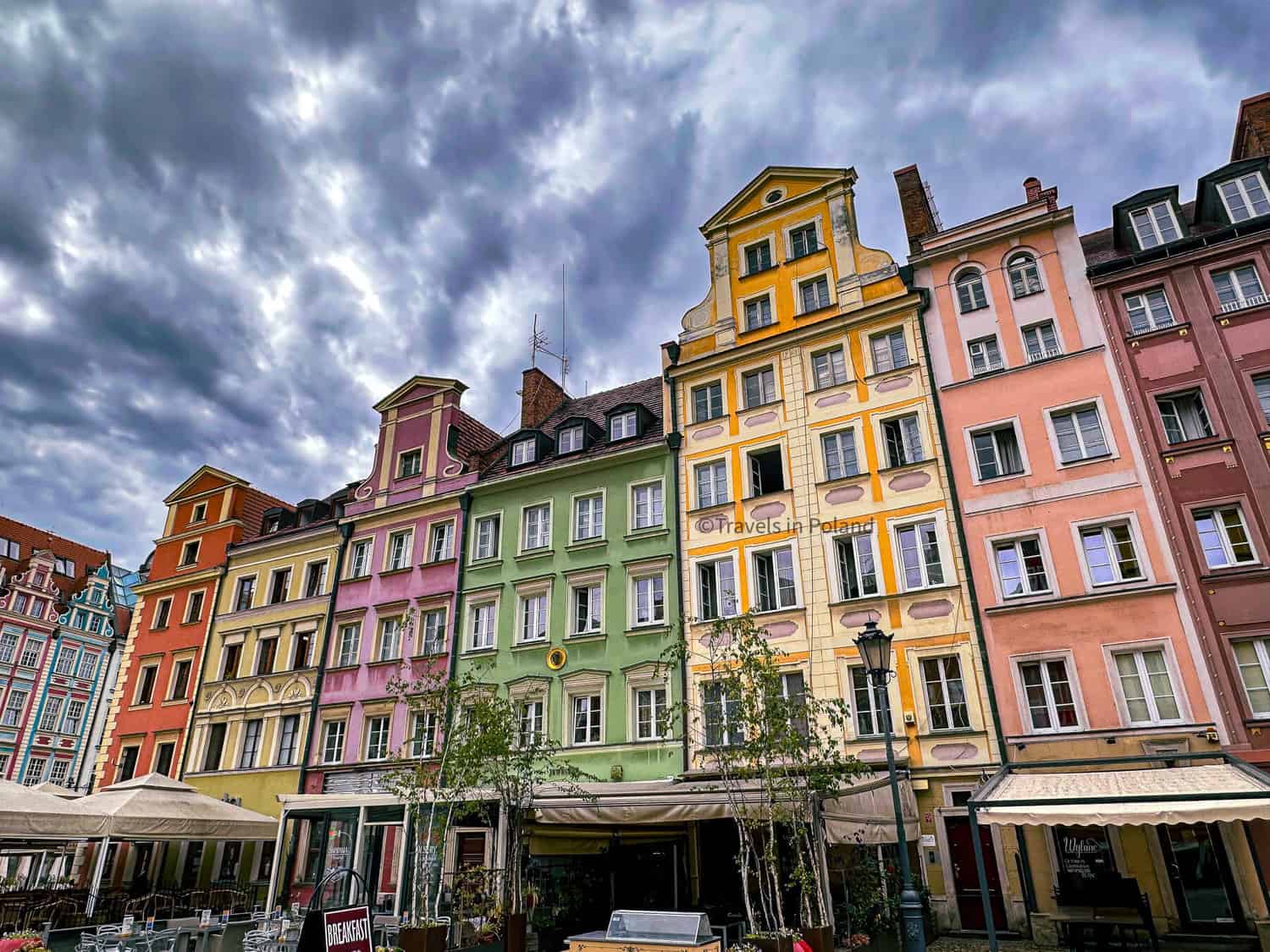
Piwnica Świdnicka, not just the oldest restaurant in Poland but one of Europe’s most ancient eateries, is in the medieval cellars of Wrocław’s Old Town Hall.
Established in 1273 during the Piast-ruled Kingdom of Poland, it offers a historical dining experience where you can savor flavors that people have enjoyed for centuries.
3. Polish is one of the world’s most challenging languages
Polish is the official language of Poland and is spoken by the majority of the country’s 38 million inhabitants.
Polish belongs to the West Slavic group of languages. It is known for its challenging pronunciation and complex grammar, featuring seven cases for nouns and a variety of verb aspects.
4. The largest Nazi concentration camp is located in southern Poland
Auschwitz-Birkenau, Oswiecim in Polish, was established by Nazi Germany during World War II. It was the largest of the concentration and extermination camps where over 1.1 million people lost their lives.
Today, Auschwitz-Birkenau has been preserved as a museum and memorial, drawing visitors from around the world.
5. Poland is host to one of the world’s oldest salt mines
Wieliczka Salt Mine is located just outside Krakow and was a continuously operational salt mine from from the 13th century until 2007.
As you descend 135 meters (440 feet) below the surface, you’ll enter a world sculpted entirely from rock salt.
This “Underground Salt Cathedral of Poland” is renowned for its extensive underground city carved entirely from salt.
You can explore a labyrinth of tunnels, chapels, and statues through dimly lit passages.
Wieliczka is designated as a UNESCO World Heritage Site.
6. Poland means “Land of fields”
The name “Poland” originates from the Polans, a West Slavic tribe that inhabited the Warta River Basin around the 9th century.
The term “Polans” derives from the Proto-Slavic word “pole,” which means field or plain.
This reflects the flat and open landscapes of the region where the tribe lived.
The Polish term for the country, “Polska,” literally translates to “land of the fields,” underscoring the agricultural nature of the area.
Poland is also relatively flat with 91% of its land lying below 300 meters above sea level. This makes the terrain not only easily navigable but also well-suited for agriculture.
7. A world famous composer was born in Poland
Poland produced one of the world’s most famous composers, Frédéric Chopin. His music remains immensely popular and continues to influence musicians worldwide.
8. Warsaw- The Phoenix City
Warsaw, the capital of Poland, was almost completely destroyed during World War II but has been rebuilt.
Today, it’s a thriving center for commerce and culture, famously known as the “Phoenix City” as it has arisen from the ashes.
9. Concept of Earth revolving around the Sun was born in Poland
Nicolaus Copernicus, a Renaissance mathematician and astronomer, is one of Poland’s most famous historical figures.
Born in the city of Toruń in 1473, Copernicus is best known for his revolutionary theory that the Earth and other planets revolve around the Sun, challenging the prevailing geocentric model that placed Earth at the center of the universe.
This heliocentric theory was a pivotal moment in the history of science, laying the groundwork for modern astronomy.
10. Pope John Paul II- first non-Italian pope in over 400 years
Born Karol Józef Wojtyła in 1920 in Wadowice, Poland,Pope John Paul II served as pope from 1978 to 2005.
He was the first non-Italian pope in over 400 years and one of the pivotal figures in the fall of communism in Eastern Europe, especially in Poland.
His deep connection to his homeland and strong advocacy for freedom and human rights had a profound impact on Poland’s political and spiritual life.
Canonized as a saint in 2014, his leadership and moral guidance continue to be celebrated in Poland and around the world.
11. Did vodka originate in Poland?
The origins of vodka are hotly debated between Russia and Poland, but many compelling points support the claim that vodka originated in Poland.
Historical records from Poland mention vodka as early as the 8th century, predating most references in Russia.
The term itself derives from the Slavic word for water.
Polish vodka, traditionally distilled from grains or potatoes, is renowned for its purity and smoothness.
12. First Upside Down House
The first upside down house in the world is in Szymbark, Poland, symbolizing the turmoil of Communist rule.
This quirky structure, designed with its roof on the ground and foundation in the air, offers a glimpse into a house from the 1970s, showcasing how life felt disoriented under Communist rule.
Since its opening in 2007, the house has become a fascinating attraction, drawing visitors eager to walk through its topsy-turvy interior
13. Bees & Cats at the Palace of Culture and Science
The Palace of Culture and Science is a multifunctional building in Warsaw.
With theaters, museums, and office spaces, but it also has some rather unique inhabitants.
On the rooftop, a collection of beehives has been established, contributing to urban beekeeping trends and promoting biodiversity in the city. These bees help pollinate the surrounding green areas and provide honey.
Additionally, the palace grounds are home to a group of feral cats. These cats, supported by local caretakers, help control the rodent population and have become a part of the palace’s ecosystem.
14. High Catholic Rate
Poland has one of the highest percentages of Catholics, with about 92% of the population identifying as Roman Catholic.
This places it among the top nations in Europe in terms of the proportion of the population adhering to the Catholic faith.
15. The country of Poland…vanished?
Poland was erased from maps for 123 years.
Throughout the tumultuous late 18th century, Poland faced a dire challenge that ultimately reshaped its national borders and identity.
The nation was divided not once, but three times, by its more powerful neighbors—Russia, Prussia, and Austria. These historic partitions, occurring in 1772, 1793, and 1795.
Eventually Poland found its rightful place again, but the country continued to struggle for sovereignty and self-determination well into the 20th century.
16. Invention of Mazurka Dance
A traditional Polish folk dance, the Mazurka, showcases a lively tempo. It is one of the things Poland is famous for.
Originating in the 19th century, the dance is characterized by its playful and quick-paced steps.
Dancers typically move with a combination of hopping and walking steps, creating a lively atmosphere that invites everyone to join in.
17. Poland is home to one of the oldest universities in the world
The Jagiellonian University was founded by Casimir III the Great, making it the second oldest university in Central Europe after Charles University in Prague.
Nicolaus Copernicus, the famous astronomer who proposed that the Earth orbits the sun, studied at the Jagiellonian University.
The university houses the Jagiellonian Library, which contains one of the largest collections of medieval manuscripts in Poland, including Copernicus’ own writings and rare medieval documents.
18. Largest open air music festival
Originally called the Woodstock Festival, the renamed Pol’and’Rock festival, is an annual event in Poland draws over 600,000 people each year.
With a lineup that cuts across genres, it brings people together from all over the globe to share in a spectacular, communal experience.
19. Free University
Polish universities offer a wide range of programs at no cost to locals, making higher education accessible and affordable.
International students also benefit with exceptionally low tuition fees compared to other European countries.
Moreover, many universities in Poland offer courses in English, attracting students from around the globe.
20. Marie Curie: Radium and Polonium
Marie Curie, born Maria Skłodowska in Warsaw, was the first woman to win a Nobel Prize and the only person to win it in two different sciences—Physics and Chemistry.
Curie conducted critical research on radioactivity, and discovered two elements, radium and polonium, naming the latter in honor of her native Poland.
Curie also founded the Curie Institutes in Paris and Warsaw, which remain prominent centers for medical research today.
21. Different last names?
In Polish culture, surnames adapt to reflect gender distinctions.
For example, names ending in -ski or -cki are masculine, while their feminine counterparts end in -ska or -cka.
Thus, a man may be called Nowakowski, and his daughter would be known as Nowakowska.
This unique aspect of the Polish language illustrates the gender of an individual directly through their surname.
22. National Animal: Eagle, Bison or Stork
Poland doesn’t have an official national animal, but the white-tailed eagle is often considered a national symbol, featuring prominently on the coat of arms and embodying strength and freedom.
Additionally, the European bison and the stork are cherished as regional animals, each representing significant aspects of Poland’s natural heritage.
The bison, roaming the ancient Białowieża Forest, symbolizes the country’s rich biodiversity and conservation successes, while the stork, commonly nesting across rural Poland, is celebrated for bringing good luck.
23. Mushroom picking
Mushroom picking is a cherished tradition in Poland, especially popular in the fall when the forests are full of mushrooms.
This isn’t just a hobby; it’s a skill taught from a young age.
Children learn to tell safe mushrooms from poisonous ones, a crucial skill for foraging safely.
Mushroom picking is deeply rooted in Polish cooking, adding unique flavors to traditional dishes like mushroom soup and bigos, a rich stew.
With forests covering much of Poland, people enjoy both the beauty and the natural resources these areas offer.
24. Gutenberg Bible in Poland
Yes, it’s true that you can find an original Gutenberg Bible in Poland.
The Diocesan Museum in Pelplin, located in the Kociewie region, houses this rare artifact.
The Gutenberg Bible was the first major book printed using movable type, a revolutionary technology introduced by Johannes Gutenberg in the mid-15th century. This printing method significantly contributed to the spread of knowledge and literacy in the West.
The Pelplin copy is especially significant as it is one of only 48 surviving copies of the Gutenberg Bible and is still bound in its original 15th-century cover.
This particular Bible has a unique history, having traveled extensively during World War II to avoid being seized by the Nazis, before finally returning to Poland in 1959.
25. People have name holidays!
In Poland, each name day is celebrated almost like a birthday. The Polish calendar marks specific dates with male and female names.
On these days, known as name days, individuals receive special attention from family and friends, similar to birthday celebrations.
It’s common for Poles to give gifts such as flowers or alcohol to celebrate someone’s name day.
This tradition is deeply ingrained in Polish culture, offering another reason to gather and celebrate throughout the year.
READ MORE POSTS ABOUT TRAVEL, CULTURE AND FACTS IN POLAND
- Best Krakow to Auschwitz Tours
- Best Tours to Auschwitz from Warsaw You Can’t Miss
- What is Poland Famous For: Amazing Things Poland is Known For
- Krakow to Auschwitz: A Complete Guide
- How to buy PKP Intercity Tickets Online
- Best Polish Vodka from Poland-Your Complete Guide to Polish Vodka Brands
- Best cities in Poland to Visit
- Summer in Poland: Discover the Best Places to Visit
- The National Flower of Poland: Exploring the Significance of the Red Poppy
- Poland National Animal: An Intriguing Backstory
- Good Morning in Polish & Useful Polish Phrases
- Drinking Age in Poland: Insider Tips for a Smooth Experience
Join the
Poland Travel Group
Facebook Community
With nearly 7k members sharing everything there is to know about Poland