Good Morning in Polish & 33 Useful Polish Phrases

How do I say good morning in Polish?
Learning some basic Polish phrases is an important part of understanding and engaging with the culture when traveling to Poland.
Knowing how to say something like “Good morning” in Polish is also a great way to put people at ease and show your respect for the culture.
So how do you say good morning in polish?!
Dzien Dobry (Jane-doh-brih)
But….wait.
Even if you are not fluent in Polish, you can still take time to learn Polish greetings and Polish phrases that will make your communication easier.
Whether you are chatting with someone who is Polish, or taking a trip to Poland for the first time (or the 10th), knowing some Polish language phrases will be helpful.
In Poland, a few useful phrases will also help you connect with locals and have meaningful experiences during your travels particularly when greeting someone.
For instance, it is important to understand the differences between formal and informal language when addressing people in Polish — this will help you avoid any awkwardness or misinterpretation of the situation when speaking with natives.
I’m a native Polish speaker, and while there are tons of Polish phrases that can come in handy, I’ve picked out the best phrases that can help you communicate in Polish.
Below is a QUICK GUIDE to 31 useful phrases in Polish that you should definitely add to your arsenal of language skills! Polish grammar can be tricky so we included the English pronunciation.
We also discuss each relevant Polish phrase and when and how to use it!
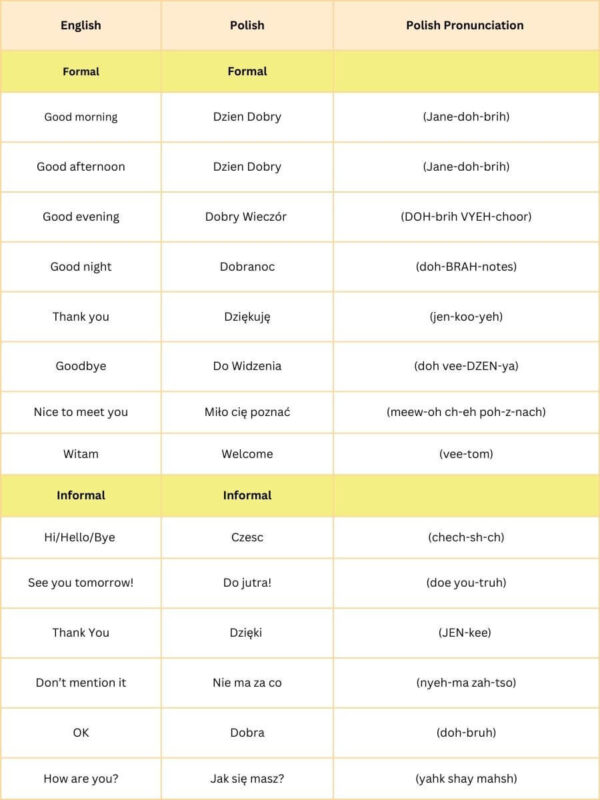
Learning these phrases in Polish will certainly make your next trip to Poland more enjoyable and meaningful.
With a few simple words, you can make a lasting impression and connect with people in ways that will enhance your journey.
So don’t hesitate to take some time to learn these phrases — you won’t regret it! Good luck on your Polish adventure!
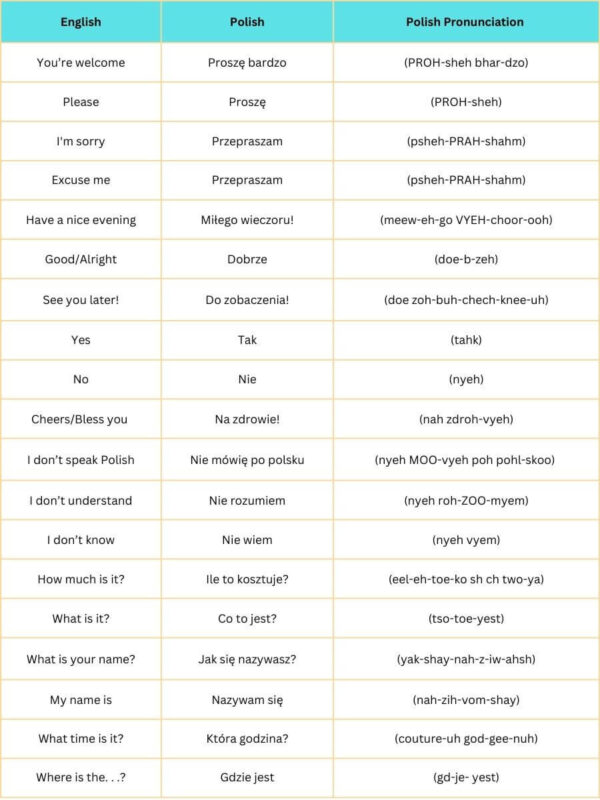
Greetings in Polish
Polish greetings and goodbyes can be both formal and informal. In the Polish language, learning Polish greetings in the proper context is important. Let’s look at how we say them and in what situations.
Polish formal greetings
Polish formal greetings are an important part of the culture and can often be used to show respect in a variety of situations. They provide a sense of warmth and familiarity and reflect the kind, hospitable nature of the Polish people.
When greeting someone formally in Polish, it is customary to use both their name and title. The most common formal greetings include “dzień dobry” followed by the person’s name and title. For example, if you were greeting a professor, it would be appropriate to say “dzień dobry profesorze” (good day, Professor).
When leaving, it is also customary to say “do widzenia” (goodbye).
Using the proper polish formal greetings can help you to make a good impression when first meeting someone. As well as showing respect and politeness, it is a good way to demonstrate your knowledge of the culture and help build bridges.
How to say good morning in Polish
Dzień dobry (Jane-doh-brih)

How to say good morning in Polish, is a very useful phrase. Good morning in polish pronunciation is Jane-doh-brih.
The phrase “Dzien Dobry” is polish for hello and is used by Poles to greet each other in both formal and informal settings.
How to pronounce good morning can be a bit tricky. Many have seen a translation of Dzien dobry as gin dobre, however using “jane” makes it a bit closer to the actually way to say the phrase.
When speaking to someone you don’t know well, it is important to use “Dzien Dobry” in order to show respect. On the other hand, if you are speaking with a close friend or family member, it is acceptable to use the more informal “Cześć” or “Hej.”
It is also important to be aware of the timing when using “Dzien Dobry.” Poles typically use this greeting in the morning and afternoon. Even though it is more so used as good morning, Polish people use it until late afternoon
When to use dzien dobry:
-when greeting new people, in both formal and informal settings
-to show respect in a given situation
-when being introduced to someone.
When using the phrase dzien dobry,, sometimes a slight smile and head nod is appropriate and is used by Poles in various regions.
How to say good afternoon in Polish
Dzień dobry (Jane-doh-brih)

Polish for good afternoon is also dzien dobry. This can used until late afternoon, where a switch can be made to good evening.
How to say good evening in Polish
Dobry wieczór (doh-brih vyeh-choor)
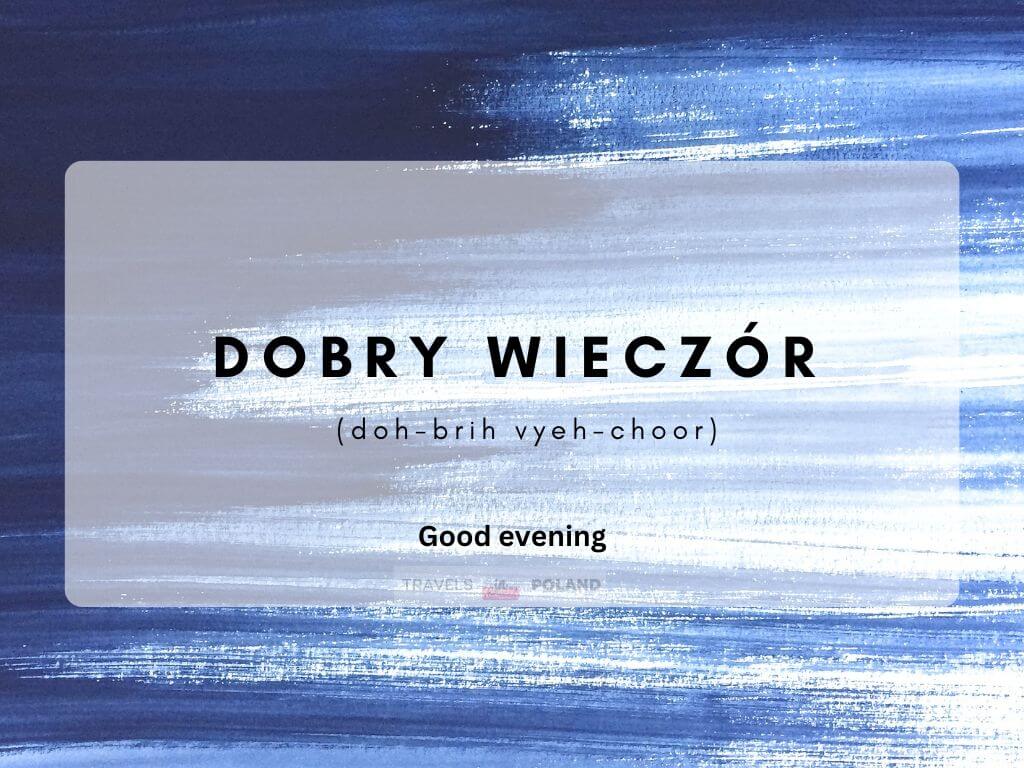
Dobry wieczór is a phrase used to formally greet someone in the evening, and it is often used as a substitute for “good evening.”
This phrase can be used in formal settings or when speaking with someone you don’t know very well. Dobry wieczor is also commonly used when welcoming guests into your home in the evening.
How to say good night in Polish
Dobranoc (doh-brah-notes)

Dobranoc is a phrase used to say “good night” and can be used both formally and informally.
This phrase is commonly heard when saying goodbye to someone at night, whether it’s a friend or family member. It can also be used when leaving a gathering or party.
How to say thank you in Polish
Dziękuję (jen-koo-yeh)

Thank you in Polish is dziękuję (jen-koo-yeh). This more formal thank you phrase is used when expressing gratitude to someone who has done something kind.
It can also be used as a general form of politeness. For example, when talking to someone in a position of authority or elderly people you can use this phrase to show respect.
How to say goodbye in Polish
Do widzenia (doh vee-dzen-ya)

It is important to know when and how to say “Goodbye” appropriately. The phrase used for saying goodbye in Polish is “do widzenia,” which translates directly to “until I see you again.” This phrase can be used both formally and informally depending on the situation.
If you are leaving a formal occasion with someone, such as after a business meeting or interview, it is appropriate to use “do widzenia”.
This phrase can also be used in other more casual situations, such as saying goodbye to friends at the end of an outing.
When speaking with family members and close acquaintances, the phrase takes on a more informal feel and can be used as a way of saying “see you later”.
No matter the circumstance, it is polite to use the phrase “do widzenia” when parting with someone in Poland. It conveys respect and appreciation for the time spent together. Saying goodbye in this way is a sign of respect and care for the person you are speaking with.
How to say nice to meet you in Polish
Miło cię poznać (meew-oh ch-eh poh-z-nach)

This phrase is a respectful way of telling someone that it was nice to meet them. This can be used when you say “dzien dobry, milo cie pozanc.”
Or it can be used at the end of an event or occasion as you are leaving, “milo bylo cie poznac.” This adds the additional “bylo” which makes it past tense.
It is typically used either in formal or informal contexts, depending on the situation.
If two strangers are meeting for the first time in a professional setting, such as a business meeting, it is common to hear “nice to meet you” (miło cię poznać). It is a polite way of introducing yourself and expressing your pleasure in being able to meet the other person.
In more informal contexts, such as when two acquaintances are meeting for the first time, it is also appropriate to say miło cię poznać. This phrase helps to break the ice and create an atmosphere of camaraderie.
How to say welcome in Polish
Witam (vee-tom)

Poland greetings, such as dzien dobry and czesc, are the most common.
However, the phrase, witam, also means “welcome” in Polish, and is becoming a more common greeting used by many people in Poland. It is an almost in between between good morning and welcome at times.
You can typically hear this phrase when entering an establishment, or after going somewhere where you have been invited.
It can be used both in formal and informal settings when meeting someone for the first time. It is a common phrase used by hosts, or if entering an establishment, it would be used by the owner of the establishment.
In an informal setting, it may be accompanied by a handshake or triple kiss on the cheek depending on the relationship between the two people.
In a formal setting, it may be followed by a more formal introduction.
Regardless of the situation, witam can be used to start the conversation.
It is important to note that witam is only appropriate in certain situations. For example, when meeting someone for the first time, it would be inappropriate to use witam if the person you are greeting is older than you or if the situation is more formal.
If you’re going on a tour for example, such as from Krakow to Auschwitz, you may hear the driver say “witam” as you enter the vehicle.
In such cases, it would be more appropriate to use the more formal “dzien dobry” (good day). Witam can also be seen as a bit dismissive in certain contexts, so it’s important to consider who you’re speaking to and the situation before using witam.
Witam is a great way to break the ice in social settings and start conversations. It’s a friendly, lighthearted greeting that can help you connect with people quickly.
Polish Informal greetings
Informal Polish greetings are ones that are used more with friends, family and acquaintances. While not all informal greetings are purely informal, many of them are used in a more casual way. As always, context is important to consider.
How to say hello in Polish
If dzien dobry is good morning in Polish, then how do you say hello in polish? Depends on who you are meeting.
There is not necessarily a direct “hello” translation for formal situations. Therefore, and not surprisingly, “dzien dobry” is also the way to say hello in Polish to people are meeting for the first time.
You can use dzien dobry when meeting new individuals as a way to greet them. But there is another way to say hello in Polish.
How to say hi in Polish
Cześć (chech-sh-ch)

The polish language has both formal and informal ways for greetings. While “dzien dobry” is the more formal, good morning or hello, there is an informal way how to say hi in Polish.
Cześć is a casual Polish greeting that has been around for centuries. In English, it translates to hi or hello.
Czesc is used in casual settings as a greeting between family members, friends and acquaintances.
When it comes to the formality of czesc, you should always use your best judgement in any given situation and consider the context in which it is being used.
Generally, if an individual uses a respectful tone when using this greeting then it is considered polite and appropriate. For example, when greeting an elder or authority figure it is best to stick with a more formal greeting such as “dzień dobry” instead of czesc.
When to use Cześć:
- greeting people such as family members, friends, colleagues, fellow students or individuals you know in informal situations
- an individual you are more familiar with
- your peers
- an individual who greets you with czesc. This type of greeting is indicating a less formal introduction and should be used in kind. In this instance, understanding and reflecting the tone is important.
When NOT to use czesc:
- greeting someone who just met
- any formal setting, such as a business setting
- an authoritative figure such as an elder, a professor, a guide etc;.
Czesc is also used to say goodbye. It is equivalent in its informality and is typically used in a upbeat way when saying goodbye. Saying czesc as a goodbye usually occurs between family, friends, and those you have gotten to know better.
How to say see you tomorrow in Polish
Do jutra! (doe you-truh)

This phrase is used when telling someone goodbye. It is usually used for friends or colleagues after parting ways for the day. It’s a way of saying, see you later, or see you tomorrow.
How to say thank you in Polish
Dzięki (jen-kee)
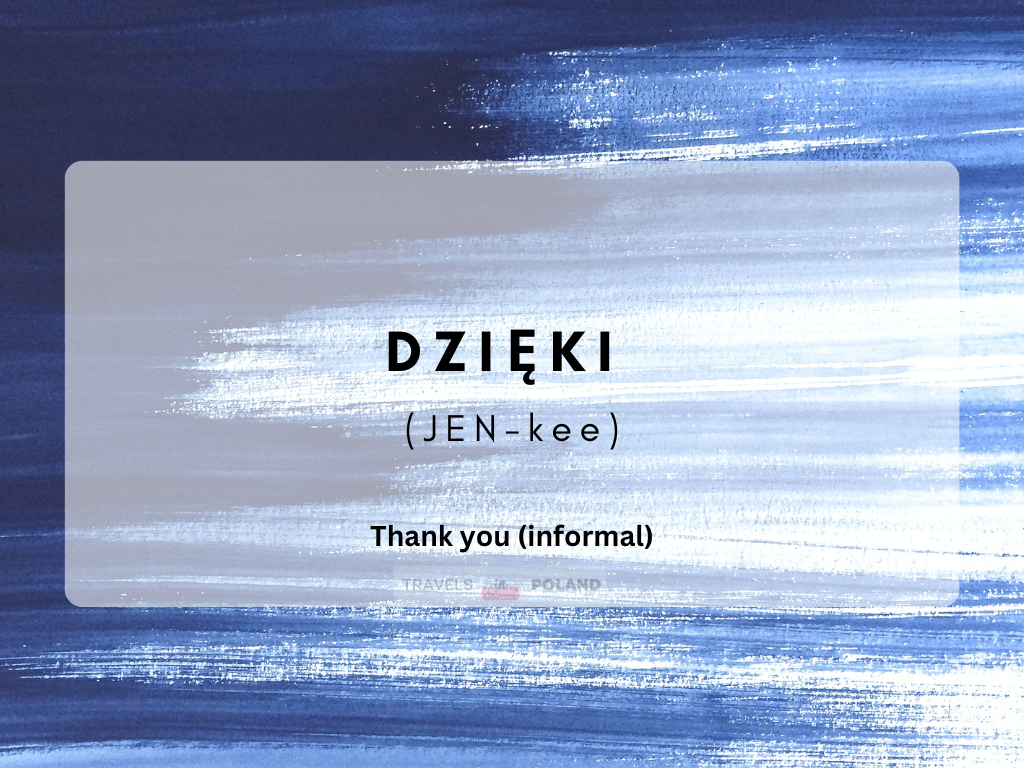
The informal way to say thank you in Polish is dzięki. This phrase is mostly used in informal settings, such as when expressing gratitude to friends and family. It is also used as a general form of politeness in everyday life.
How to say don’t mention it in Polish
Nie ma za co (nyeh ma zah tso)

An informal way to say thanks or don’t mention it in Polish is nie ma za co. This phrase is used to acknowledge someone’s thanks and is usually used in informal settings.
It can be used as a sign of appreciation when someone does something for you, such as bringing you a cup of tea or helping with something around the house.
Nie ma za co, is a response to thank you, both the formal “dziekuje” and the informal “dzieki.”
How to say good in Polish
Dobra/Dobrze (doe-bruh/doe-b-zeh)

How do you say good in Polish?
Dobra in Polish is used as an expression of agreement or approval. It is used primarily in informal situations alike, by both adults and children.
Dobrze is the formal version of dobra and is most commonly used when speaking to someone older than you.
It implies respect and agreement and can be used to agree with something that has been said. It is also used in the past tense to refer to something that has already happened.
It is considered polite and should be used when speaking to elders or in formal settings.
When speaking to someone older than you, such as a teacher or elder, dobra should be used in its formal form “dobrze.”
When speaking to someone younger, such as a friend or family member, dobra can be used, though dobrze is more respectful.
Overall, dobra and dobrze, are used as expressions of agreement or approval.
Depending on the situation, one of these words should be used to convey the appropriate level of respect.
How to say how are you in Polish
Jak się masz? (yahk shay mahsh)

How are you in Polish is jak się masz. This phrase is used in informal settings, such as when greeting friends and family.
It can also be used when inquiring about someone’s wellbeing, which in turn would make it ok in more formal setting. This is a word that depends on the context of the situation.
When to use jak sie masz:
Informally:
- informal settings when greeting family members and friends
- an individual you are more familiar with
- your peers
- an individual who greets you with czesc. This type of greeting is indicating a less formal introduction and should be used in kind. In this instance, understanding and reflecting the tone is important.
Formally:
- To inquire about an individual’s well being. Depending on the context, it can immediately following dzien dobry. “Dzien dobry, jak sie masz?”
Polish phrases (general)
There are numerous Polish phrases that can be used in speaking with people.
Here are more helpful Polish phrases and words, including the written Polish grammar and Polish language pronunciation to help you learn quickly!
How to say hello, how are you in Polish
Dzien dobry, jak się masz? (Jane doh-brih yahk shay mahsh)

For “hello, how are you” you would say:
“Dzien dobry, jak sie masz?”
The Polish hello, how are you is fairly simple as it puts together the two phrases one after another.
This phrase would be used in a setting where you are meeting new people, or sometimes even individuals you have met before.
How to say please in Polish
Proszę (proh-sheh)

Prosze mean please in Polish. However it also means here you are in some contexts. This can get tricky as this word has to be used in context.
This phrase is used both formally and informally depending on the situation. In formal settings, it can be used when offering something to someone or requesting something from them. For example, if you are asking for a favour then you would say proszę.
Prosze can be used as a sign of politeness when offering something to someone. It can be used as a way to say “here you go” as in “prose” or “prosze bardzo.” You may encounter this in a restaurant, cafe or other service based locations.
How to say you’re welcome in Polish
Proszę bardzo (proh-sheh bhar-dzo)

This is another way to say “you’re welcome” This is typically followed after dziekuje and is used in a more formal situation, in a store, at the bank, on a tour etc;. It’s a fairly common way to say you’re welcome.
Prosze bardzo, is a bit more formal way to say thank you to someone.
How to say I’m sorry in Polish
Przepraszam (psheh-prah-shahm)

I’m sorry in Polish is przepraszam. This phrase can be used both formally and informally, depending on the situation.
In formal settings, such as when speaking to someone in authority, using this phrase is appropriate when indicating that you are sorry.
In an informal setting, you can use this phrase if you have done something wrong.
How to say excuse me in Polish
Przepraszam (psheh-prah-shahm)

Przepraszam is also used to say excuse me. If you bump into someone, you can say przepraszam to say excuse me.
You can also use przepraszam if you need to get someone’s attention. For example, if you are in a store or need help, you can use przepraszam to get their attention on you.
How to say have a nice evening in Polish
Miłego wieczoru! (meew-eh-go vyeh-choor-ooh)
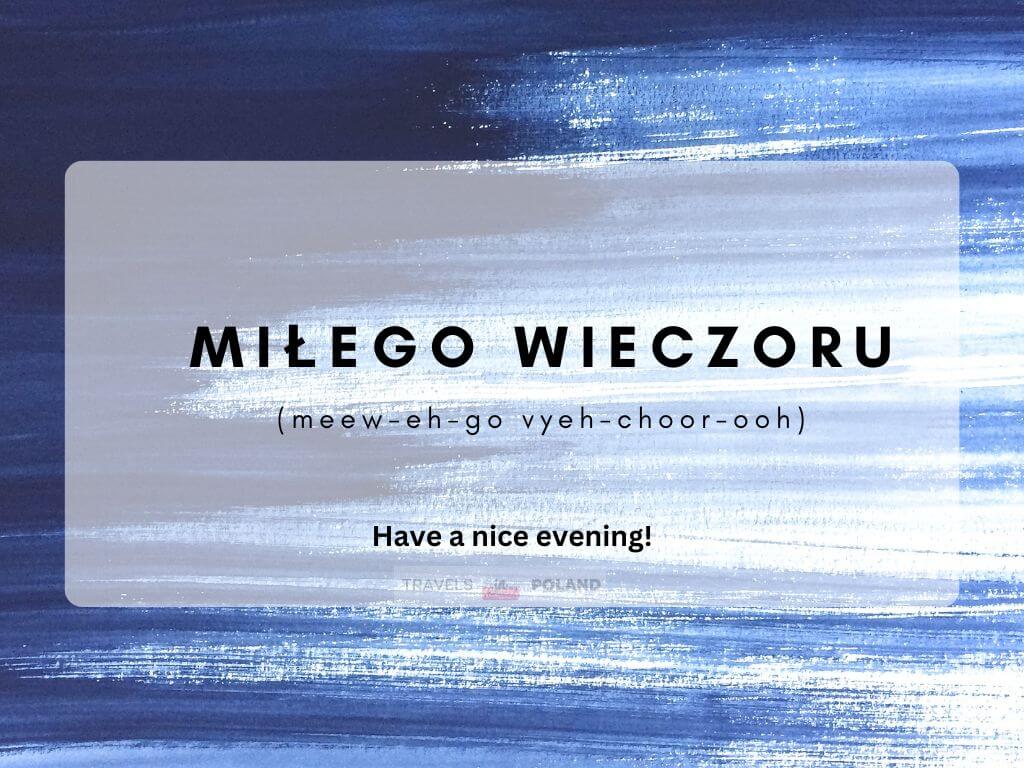
Greeting someone with “have a nice evening” or its Polish equivalent, “milego wieczoru,” is a polite and friendly way to end the day. This phrase can be used in both formal and informal situations to show respect and care for the other person.
In formal settings, such as when saying goodbye at the end of a meeting or leaving a party, “have a nice evening” is the perfect way to express your appreciation for the other’s presence.
In more casual settings, such as when saying goodbye to friends after hanging out together in the evening, “have a nice evening” may be used in place of “see you later” or “goodbye.”
How to say see you later in Polish
Do zobaczenia (doe-zoh-buh-chech-knee-uh)
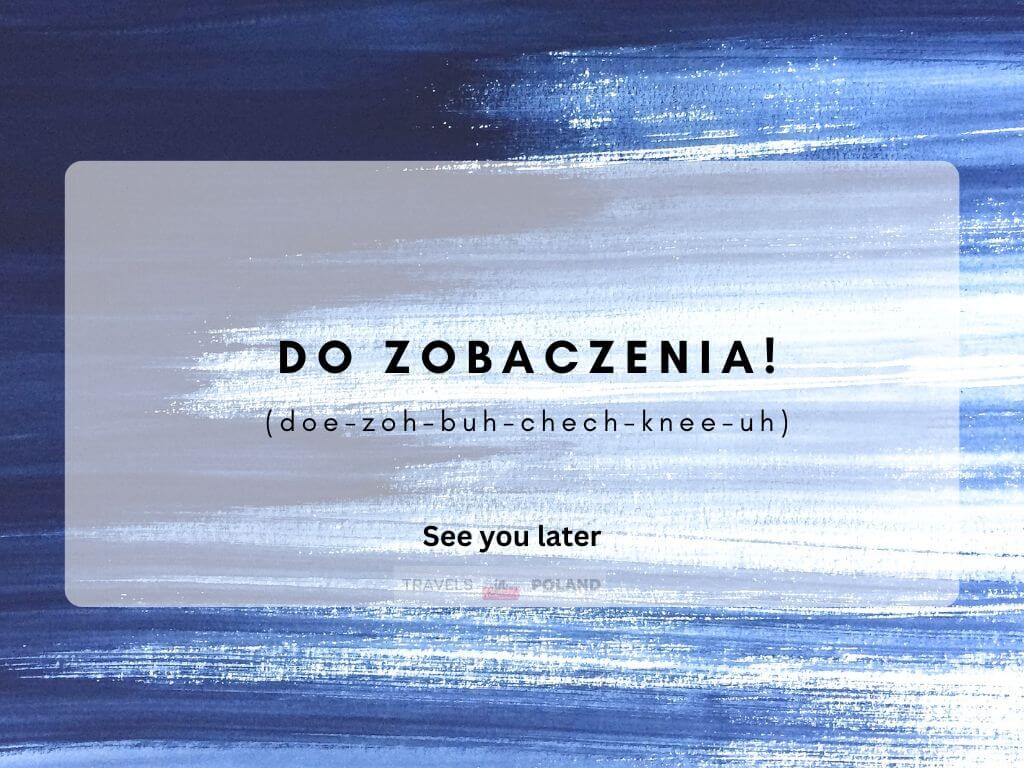
See you later or do zobaczenia in Polish, is a common phrase used in Poland. It literally translates to “see you later”, and it’s usually used as an informal way of saying goodbye.
Depending on the situation, this phrase can be used with friends and acquaintances alike.
It could be used when someone leaves a gathering, such as a party or dinner. In this situation, it would usually be used between close friends and family members who are saying goodbye to each other.
It’s also an appropriate way to end a conversation with someone you just met, but don’t know well yet.
It can also be used when leaving the workplace. When saying goodbye to colleagues at the end of the day, do zobaczenia is a polite and informal way to say farewell.
In all situations, this phrase conveys a sense of goodwill and friendliness.
How to say yes in Polish
Tak (tahk)

Yes in Polish is tak.
It is a pretty straightforward phrase and used in situations where you would need to answer in the affirmative.
How to say no in Polish
Nie (nyeh)

No in Polish is nie.
In proper context, Nie means no. In informal settings,such as when we gather with friends gather and are perhaps telling stories, the phrase “no nie” can be a phrase of disbelief, again depending on the context and tone of the conversation.
Adding the preceding no, is what changes the phrase to one of disbelief.
How to say cheers in Polish
Na zdrowie! (nah zdroh-vyeh)

Cheers in Polish is na zdrowie! This phrase is also used to wish someone good health, usually when people are drinking together or after sneezing.
It is a sign of good luck and can also be used as a form of gratitude.
How to say I don’t speak Polish
Nie mówię po polsku (nyeh moo-vyeh poh pohl-skoo)

The phrase nie mówię po polsku is translated into I don’t speak Polish.
This phrase can be used whenever you are in a situation where you need to make it clear that you do not understand the language being spoken.
It is a polite way of indicating that you cannot communicate in the language and can be used in both formal and informal settings.
How to say I don’t understand in Polish
Nie rozumiem (nyeh roh-zoo-myem)

I don’t understand in Polish is nie rozumiem. This phrase can be used when someone is speaking to you and you simply do not understand.
It is a polite way of indicating that you are unable to comprehend what is being said, and can be used in any setting.
How to say I don’t know in Polish
Nie wiem (nyeh vyem)

I don’t know in Polish is nie wiem. This phrase is basically telling someone that you don’t know something, such as the Polish language.
You will also use it when you are unable to answer a question as it is a polite way of indicating that you do not know the answer to something.
How to say how much is it in Polish
Ile to kosztuje? (eel-eh toe ko-sh-ch-two-ya)

How much is it in Polish is Ile to kosztuje?
This phrase is used when inquiring about the cost of something. It is a polite way of requesting information, and can be used in both formal and informal settings.
How to say what is it in Polish
Co to jest? (tso-toe-yest)

A simple phrase, used to ask what something is. Co to jest can be used in any situation when needed, both formally and informally.
How to say what is your name in Polish
Jak się nazywasz? (yak shay nah-z-iw-ahsh)

This is one of two ways to ask someone what their name is. This phrase requests that the individual responds with both a first and last name.
This question is more common when you need to fill out information or someone is asking you for information.
The second way to ask is “jak masz na imię” which is a more informal way and would be used when simply asking someone what their name is in a conversation.
Both are neutral uses of the phrase and used for males and females.
How to say my name is in Polish
Nazywam się… (nah-zih-vom-shay)

This phrase is the response to the question of what is your name. Nazywam sie is followed by your name.
Another way to say my name is, “mam na imię.” This phrase is more common in conversations, though both can be used.
How to say what time is it in Polish
Która godzina? (couture-uh god-gee-nuh)

This is the phrase asking for the time. Formally, you would say “dzien dobry, ktora godzina” before asking a stranger the time.
How to say where is the in Polish
Gdzie jest (gd-je- yest)
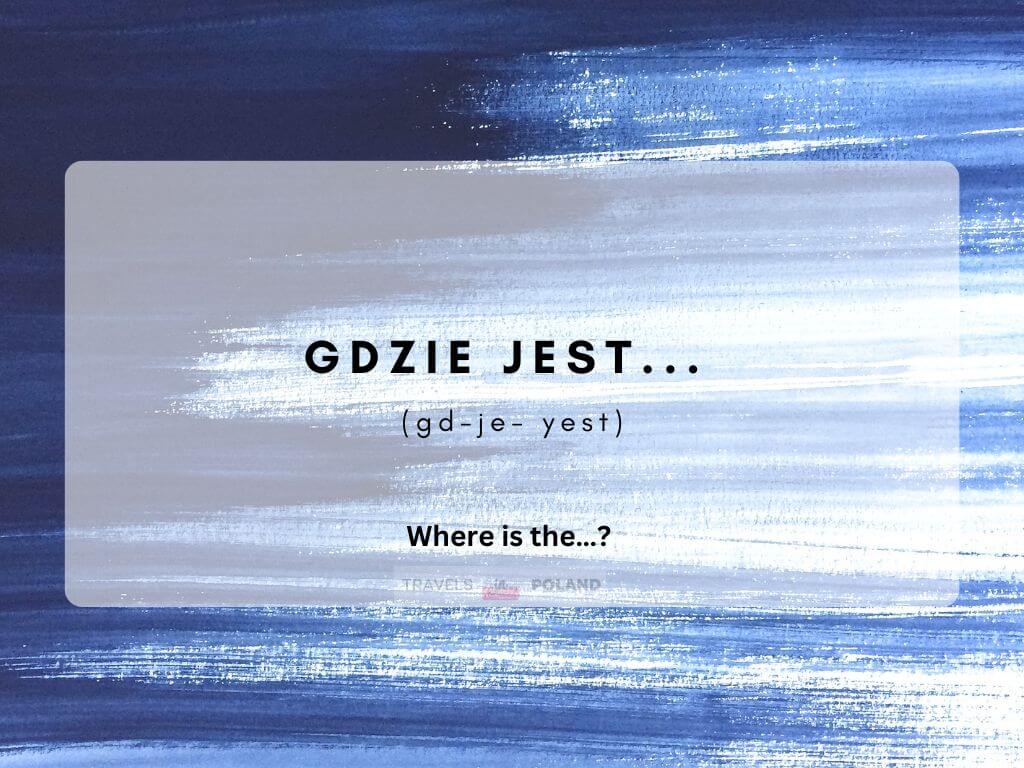
This phrase is used to ask where something is located and needs to be followed by what it is you are asking.
For example, “gdzie jest lazienka” (where is the bathroom) or “gdzie jest stacja kolejowa” (where is the train station).
How do you greet a polish person?
Dzien dobry is the best way to greet a Polish person, as it is the respectful phrase for saying hello or good day in Polish.
What does yakshemash mean in polish?
This it the phonetic pronunciation of “jak sie masz” which means, how are you in Polish.
What is a polish goodbye?
When saying goodbye to someone, you can say “do widzenia” which is the traditional goodbye.
Final Thoughts
Learning Polish greetings is a great idea if you want to communicate with people who speak the Polish language. Particularly if you are traveling to Poland.
It can get a bit confusing trying to understand when to say something.
Knowing how to say good morning in Polish, informally is a great first start. But this Polish greeting can get a bit murky.
In Polish, good morning (dzien dobry) is also used interchangeably with good afternoon, hello and good day in polish. Greetings in Poland depend on the context.
Learning even more greetings in Polish will make you seem a bit more impressive, particularly if you get the pronunciation down.
So start with a small phrase, such as how to say good morning in Polish, and add some additional Polish phrases. It most definitely will come in handy if you ever travel to Poland.
Join the
Poland Travel Group
Facebook Community
With nearly 7k members sharing everything there is to know about Poland
READ MORE POSTS ABOUT TRAVEL, CULTURE AND FACTS IN POLAND
- Best Krakow to Auschwitz Tours
- Best Tours to Auschwitz from Warsaw You Can’t Miss
- What is Poland Famous For: Amazing Things Poland is Known For
- Krakow to Auschwitz: A Complete Guide
- How to buy PKP Intercity Tickets Online
- Best Polish Vodka from Poland-Your Complete Guide to Polish Vodka Brands
- Best cities in Poland to Visit
- Summer in Poland: Discover the Best Places to Visit
- The National Flower of Poland: Exploring the Significance of the Red Poppy
- Poland National Animal: An Intriguing Backstory
- Invaded But Invincible: How Many Times Has Poland Been Invaded