
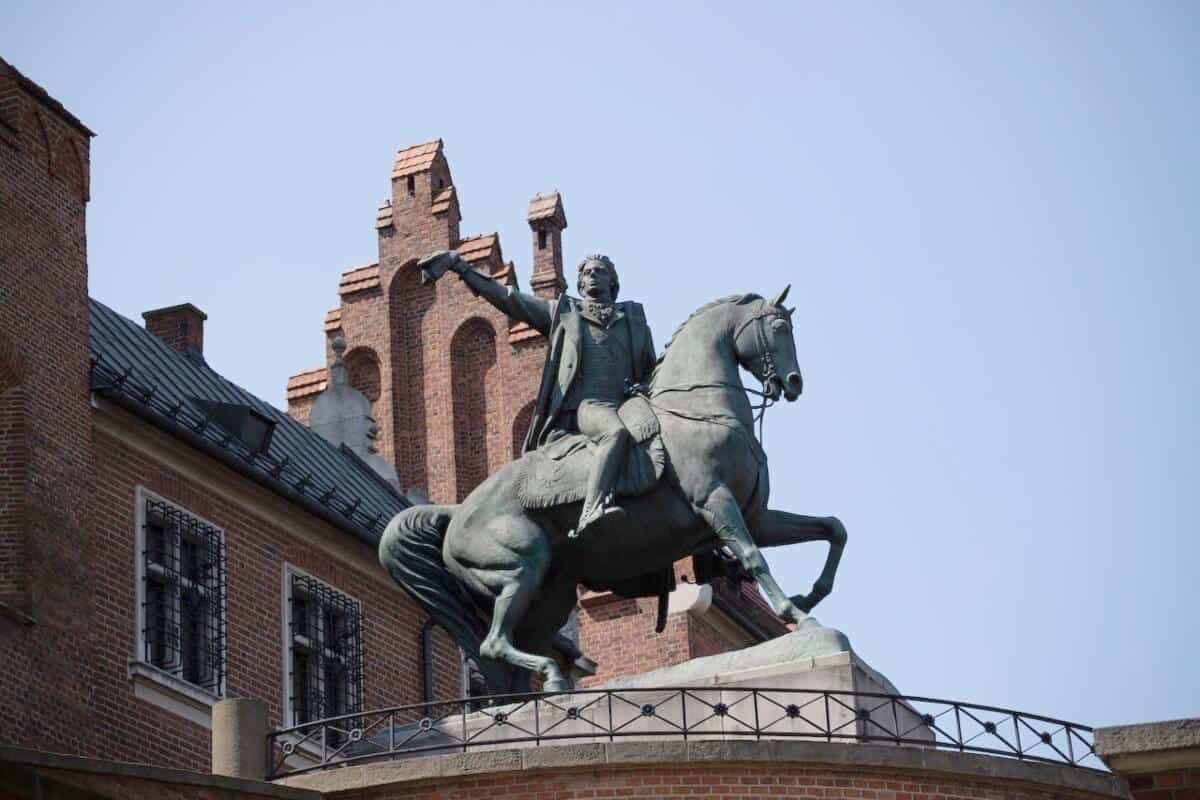
Invaded But Invincible: How Many Times Has Poland Been Invaded

The question of “How Many Times Has Poland Been Invaded?” stirs curiosity in many minds.
Understanding history can sometimes be overwhelming due to the complexity and volume of events.
Finding credible, clear, and comprehensive information can be a challenge, especially about a topic as intricate as the invasions of Poland.
I’m here to simplify that for you.
Armed with historical facts, geopolitical understanding, and an appreciation for the narratives that shaped Poland’s history, I will navigate you through Poland’s tumultuous history of invasions.
I aim to craft a historical journey that’s not just informative, but also compelling and engaging, so let’s get to it.
We have to understand Poland a bit more.
Poland has witnessed a complex and frequently turbulent history marked by numerous invasions and conflicts.
These invasions have come from a variety of sources throughout history.
The modern state of Poland, established in the 10th century, has been invaded or fought wars on its soil over dozens of times.
Depending on how you count a fight on its soil or an invasion, some sources cite anywhere from twenty to well over two hundred, invasions, wars, Polish battles or other foreign operations.
But why so many?
Brief History of Poland: Poland War History
Poland is in a central location which has made it a frequent battleground, drawing powerful neighbors to its borders with the intent to conquer or control.

Source: Wikipedia Commons by TUBS, CC BY-SA 3.0 , via Wikimedia Commons
Beginning in the medieval era with the Mongol invasions of the 13th century, followed by Teutonic Knights in the 14th and 15th centuries, the country has seen recurrent military incursions.
The Polish–Lithuanian Commonwealth, formed in 1386, faced invasions from Sweden, Russia, and the Ottoman Empire among others.
The late 18th century saw the tragic Partitioning of Poland, where the country was divided and annexed by the neighboring powers of Russia, Prussia, and Austria, effectively erasing Poland from the map for 123 years.
The 20th century brought even more tumultuous times, with Poland being invaded by Germany and the Soviet Union during World War II.
This period left indelible scars on the nation, as Poland suffered one of the highest loss rates of life and property in the war.
In the post-war period, while there were no physical invasions, Poland was subjected to political and ideological domination by the Soviet Union until the end of the Cold War in 1991.
Since then, Poland has remained sovereign and intact, despite the numerous historical upheavals and invasions it has endured.
Despite the struggles and hardships, Poland has consistently risen from the ashes, reaffirming its independence and sovereignty.
This ability to persist and recover has shaped Poland’s national identity and has had a profound impact on its place in the world today.
While Poland has maintained its independence and has not been invaded since the end of World War II, the post war period under Soviet influence is considered by some as a not fully independent Poland.
Especially if you take a look at what political systems operated during this time.
While Poland is now a fully independent unitary parliamentary representative democratic republic, it’s important to understand its history of invasions.
HOW MANY TIMES HAS POLAND BEEN INVADED
Overview of Major Invasions of Poland
If considering invasions as major foreign military incursions that significantly impacted the sovereignty and structure of the country, Poland has been invaded six major times in its history:
- Mongol Invasion in the 13th Century
- Swedish Invasion (The Deluge) from 1655 to 1660
- Partitions of Poland by Russia, Prussia, and Austria from 1772 to 1795
- Influence and partial control during the Napoleonic era from 1807 to 1815
- Invasion during World War I from 1914 to 1918
- Invasion and occupation during World War II from 1939 to 1945
Wars of Poland Prior to the Mongol Invasion
Poland has indeed faced invasions and incursions from various groups even before the Mongol invasion in the 13th century.
It’s important to note, however, that these early invasions occurred during periods when the concept of a unified Polish state was still developing.
Some significant invasions prior to the Mongol invasion include:
- Germanic invasions (2nd-5th century AD): Various Germanic tribes invaded and settled in parts of present-day Poland during the Migration Period, particularly after the fall of the Roman Empire.
- Hunnic invasions (5th century AD): The Huns, a nomadic warrior people from Eastern Europe, made incursions into parts of present-day Poland during their westward expansion.
- Avar invasions (6th-7th century AD): The Avars, a nomadic horse-riding people from Central Asia, conducted raids and invasions in parts of Poland during their peak.
- Magyar invasions (9th-10th century AD): The Magyars, ancestors of modern Hungarians, raided and invaded parts of Poland during their migration from the Ural Mountains towards the Carpathian Basin.
- Viking invasions (8th-11th century AD): Poland, like much of the rest of Northern and Eastern Europe, saw Viking invasions and raids during the Viking Age.
The Christianization of Poland in 966 AD under the Piast dynasty marked a significant turning point in the consolidation of Polish territories and the formation of a cohesive Polish state, paving the way for Poland to become a major player in medieval European politics.
General List of Wars Involving Poland: Post Viking Invasions
After the Viking invasions, Poland, under the Piast dynasty, managed to consolidate its territories and began to play a major role in regional politics.
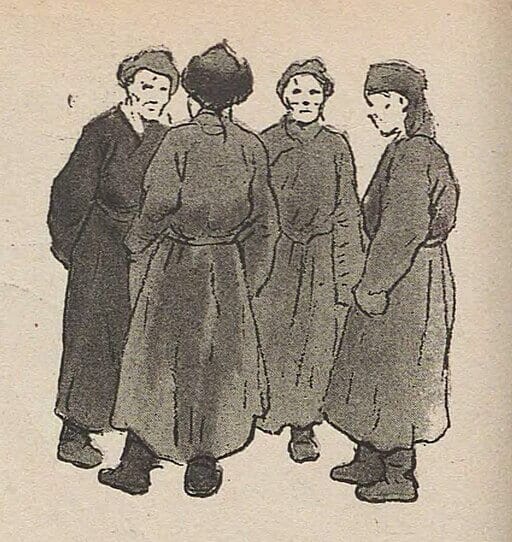
Source: Joseph de La Nézière, Public domain, via Wikimedia Commons
The country dealt with numerous invasions and conflicts, but these often involved more complex political and military interactions compared to the relatively straightforward raids by the Viking, Avar, and Magyar invaders.
Here are some of the significant invasions after the Viking period:
- Bohemian invasions (10th-11th century): Various conflicts and invasions took place between Poland and Bohemia (now part of the Czech Republic), often tied to disputes over control of the region of Silesia.
- Teutonic Knights (13th-15th century): The Teutonic Order, a German medieval military order, launched invasions against Poland, culminating in the Polish-Lithuanian-Teutonic War. This conflict was distinct from earlier ones due to its religious overtones, with the Teutonic Knights launching crusades against the pagan Lithuanians and Orthodox Russians.
- Mongol invasions (13th century): The Mongols invaded Poland multiple times, causing considerable destruction. These invasions were part of the larger Mongol invasion of Europe.
- Swedish invasions (17th century): Known as “The Deluge”, this series of invasions by Sweden devastated the country and led to a temporary collapse of the Polish state.
- Partitions by Russia, Prussia, and Austria (18th century): Rather than traditional invasions, these were diplomatic and political maneuvers that resulted in Poland being divided and ruled by these three powers.
- Invasions during the World Wars (20th century): These invasions by Germany and Russia led to significant changes in Poland’s borders and had devastating effects on the country’s population and infrastructure.
Each of these invasions had different characteristics and impacts on Poland.
They often involved not just military conquest, but also diplomatic, political, and cultural aspects.
In the 14th century, Poland even experienced an internal civil war between different factions.
Over time, Poland developed a complex political and military structure to deal with these threats, which often involved forming alliances with other powers, launching counter-invasions, and engaging in diplomatic negotiations.
HOW MANY TIMES HAS POLAND BEEN INVADED
Origin of Poland
When was Poland founded: Early History and Formation of Poland
Poland’s origins can be traced back to the 10th century, a time when diverse Slavic tribes inhabited the region.
The historical figure, Mieszko I, a Duke of the Polans tribe, is often regarded as the founder of the Polish state.

Source: Aleksander Lesser, Public domain, via Wikimedia Commons
Under his rule, Christianity was adopted in 966 AD, a pivotal moment that marked Poland’s entrance into the sphere of Western civilization and began the process of uniting the tribes under one banner.
Poland Transition from Tribal Roots to a Cohesive Nation
The adoption of Christianity set the stage for a transformation from tribal society to a more organized state.
It was during the reign of Mieszko’s son, Bolesław the Brave, that Poland began to take shape as a recognized political entity with defined borders.
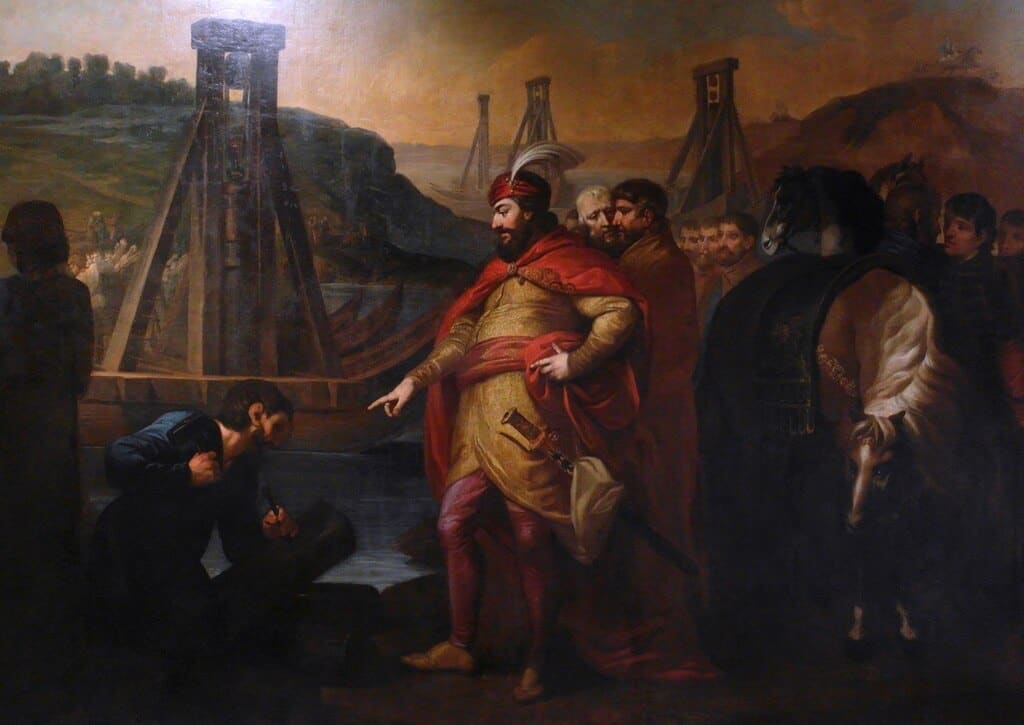
Source: Józef Peszka (1767-1831), CC BY-SA 4.0 , via Wikimedia Commons
Bolesław was crowned the first king of Poland in 1025, signifying the full acceptance of Poland into the Christian kingdom of Europe.
Over the centuries, despite numerous internal conflicts and external threats, Poland continued to develop, cementing its place as a significant power in Eastern Europe.
The Polish-Lithuanian Commonwealth, established in 1386, was a notable high point in Poland’s early history, becoming a beacon of democracy and diversity in a time when such concepts were still in their infancy in much of Europe.
Poland Location: Implications
Poland’s strategic position between the powerhouses of Europe – Germany to the west and Russia to the east – has been a defining factor in its history.
This central location, offering access to important trade routes and serving as a buffer zone between major powers, has meant that Poland has often found itself in the sights of ambitious empires.
The geopolitical significance of Poland’s location has led to its land being frequently contested, resulting in numerous invasions and partitions.
While this has undeniably brought hardships, it has also fostered a strong sense of resilience and national identity among the Polish people.
Poland at War: Major Invasions in Poland’s History
In the 13th century, the Mongol Empire, under the leadership of Batu Khan, launched two significant invasions into Poland as part of their wider conquest of Europe.
The first invasion in 1240-41 brought the Mongols into southern Poland, where they devastated the region, including the significant sack of Krakow.
The second invasion in 1259-60, although less destructive, again showcased Mongol military might and caused considerable disruption.
HOW MANY TIMES HAS POLAND BEEN INVADED
Mongol Invasion of Poland (13th Century)
Who were the Mongols, and why did they invade?
The Mongols were a nomadic tribe from the steppes of Central Asia who, under the leadership of Genghis Khan and his successors, created one of the largest empires in history.
Their invasion of Poland was part of a broader campaign to expand their territory across Europe.

Source: Rashid al-Din, Public domain, via Wikimedia Commons
The Mongols were renowned for their exceptional horse-riding skills and highly efficient military tactics.
Their objective was clear: to conquer new lands and amass wealth, and Poland, with its fertile lands and strategic location, was a prime target.
Poland Response and Result of the Invasion
The Mongols first invaded Poland in late 1240.
Despite the valiant efforts of the Polish knights, the Mongols’ superior tactics and seemingly unstoppable forces overpowered the Polish defenses.
Major cities such as Krakow and Sandomierz were razed, and the Polish countryside was devastated.
The impact of the Mongol invasion was catastrophic.
It is estimated that nearly half of Poland’s population was wiped out during this period.
The Mongols, however, did not establish a long-term rule over Poland, largely due to their nomadic nature and focus on further westward expansion.
Duration of Mongol Influence and Poland’s Liberation
Despite the severity of the Mongol invasions, their rule in Poland was short-lived. After the initial invasion, the Mongols conducted a series of raids into Polish territory but did not establish a permanent presence.
The death of the Great Khan Ögedei in 1241 led to a withdrawal of the Mongol forces, as leaders were called back to Asia for a succession dispute.
Swedish Deluge (1655 – 1660)
The Swedish Deluge, a term used to describe the Swedish invasion of the Polish-Lithuanian Commonwealth, was part of the broader Northern Wars of the 17th century.
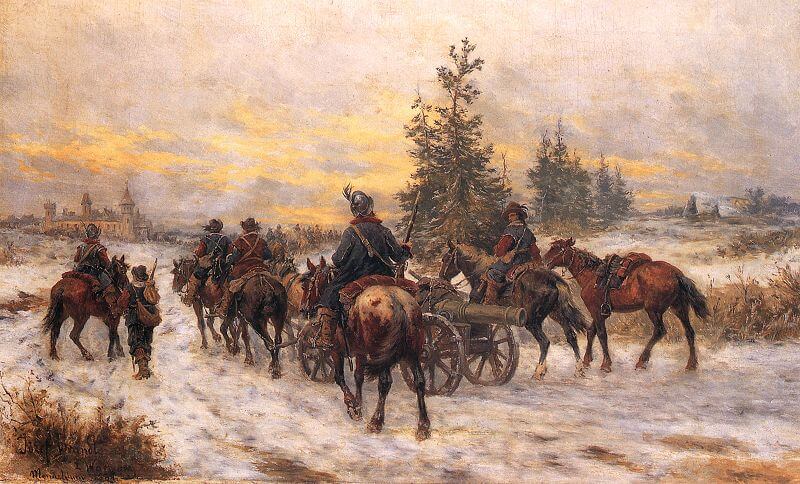
Source: Józef Brandt, Public domain, via Wikimedia Commons
The invasion was motivated by Sweden’s ambition to expand its territory and influence, and by religious differences – Sweden was a Protestant power while Poland remained staunchly Catholic.
Effects of the Invasion on Poland
Despite initial successes, the Swedish forces were eventually driven out by a united Polish-Lithuanian effort, supported by the local nobility and peasantry.
The war saw the Polish king, John II Casimir, temporarily abdicating his throne but returning to lead the successful liberation effort.
The effects of the Swedish invasion were profound. The war caused immense devastation to the Polish-Lithuanian Commonwealth, with many cities and towns destroyed, and it greatly weakened the state’s economy and military.
It has even been suggested by a scholar that the Swedish Deluge caused more extensive damage in the country than did World War II.
Occupation and Liberation
The occupation lasted for five years from 1655 to 1660.
While the Swedes initially took control of large parts of the Commonwealth, including Warsaw and Krakow, they were unable to maintain their hold.
Over time, the Polish armed forces began re-capturing cities which eventually led to the Treaty of Oliva which ended the Polish-Swedish War.
Unfortunately, the pillaging of Poland during this time was one of the worst in Polish history.
A vast number of books, art, records and many other items from palaces, churches and compounds were stolen by the Swedes during the war.
The Deluge had a significant effect on Poland.
With the nation nearly crippled, it opened up opportunities for Russia and other countries to begin partitioning the country in the latter part of the 18th century particularly as the Russian Empire rose to power.
HOW MANY TIMES HAS POLAND BEEN INVADED
Partitions of Poland (1772 – 1795)
Involvement of Russia, Prussia, and Austria
The partitions of Poland were a series of three territorial divisions of the Polish-Lithuanian Commonwealth carried out by Russia, Prussia, and Austria.
The goal was simple: to eliminate Poland as an independent entity and divide its territories among the three powers.
The partitions were met with widespread resistance within Poland.
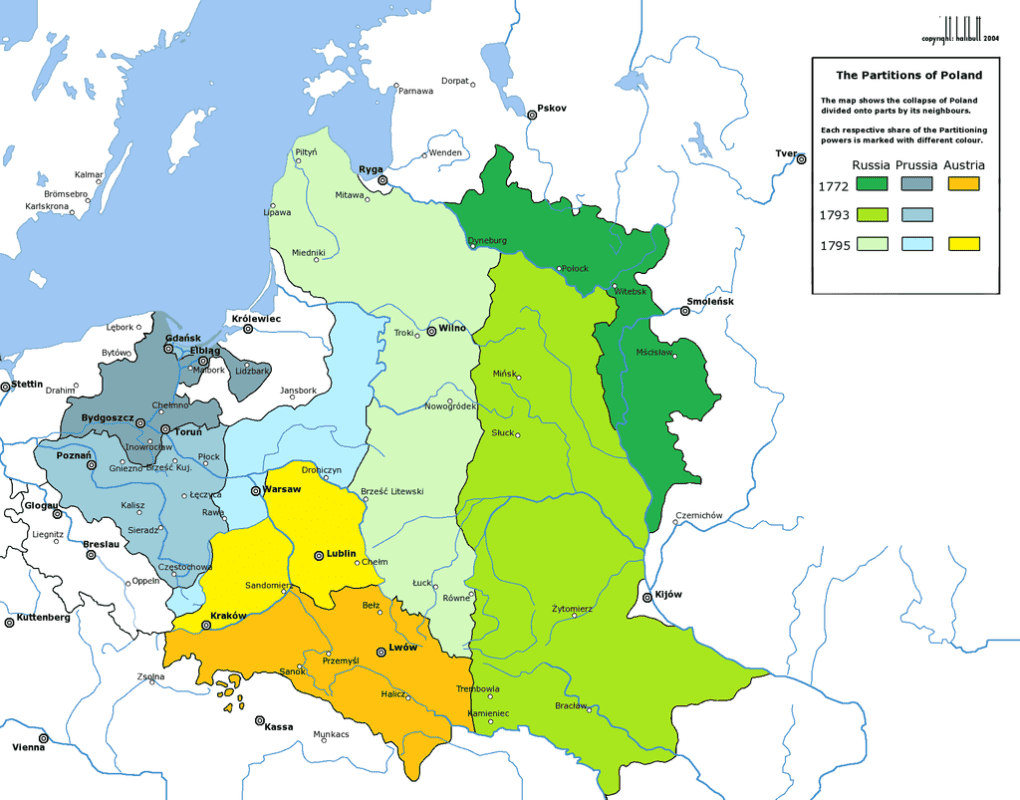
Source:Rzeczpospolita_Rozbiory_3.png: Halibuttderivative work: Sneecs, CC BY-SA 3.0 , via Wikimedia Commons
Despite numerous uprisings and efforts to maintain the nation’s sovereignty, the overwhelming military power of the partitioning nations made it impossible for Poland to effectively resist.
The long-term impact of the partitions was profound. They effectively erased Poland from the map of Europe for 123 years.
The Polish language, culture, and national identity were suppressed, particularly during the later stages of partition.
However, these adversities also fostered a strong sense of national unity and identity among the Polish people.
Duration and Ending of the Partitions
The partitions began in 1772 and ended with the final partition in 1795.
The last partition, occurring after the Kosciuszko Uprising, was the final partition that effectively caused the country to cease to exist.
Poland would not regain its independence until 1918, at the end of World War I, when the Treaty of Versailles recognized the re-establishment of a sovereign Polish state.
HOW MANY TIMES HAS POLAND BEEN INVADED
Polish Wars during the Napoleonic Era (1807 – 1815)
Creation of the Duchy of Warsaw
The Napoleonic era saw a brief period of respite for Poland.
In 1807, following Napoleon Bonaparte’s victories against Prussia and Russia, the Duchy of Warsaw was created.
Although it was not a fully sovereign state and was a satellite of the French Empire, the Duchy of Warsaw marked a significant step towards the restoration of a Polish state.
Napoleon’s influence had a profound impact on Poland.
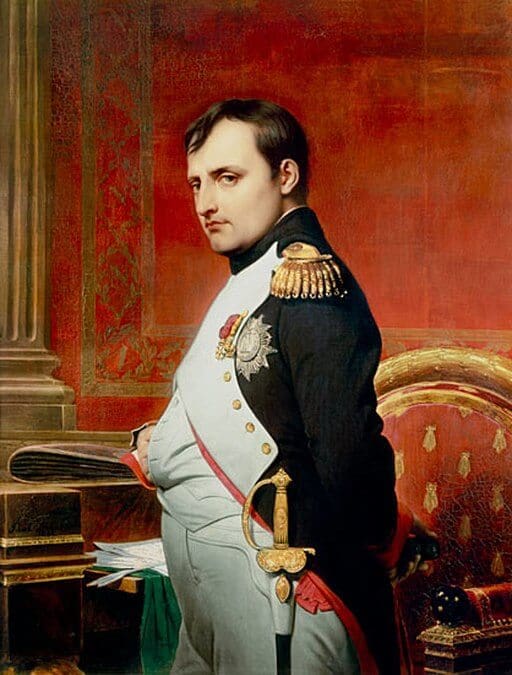
Source: Paul Delaroche, Public domain, via Wikimedia Commons
French revolutionary ideals of liberty, equality, and fraternity resonated with many Poles, leading to societal changes and the spread of these ideals throughout the nation.
Polish Contributions to Napoleonic Campaigns
Polish soldiers played a significant role in Napoleon’s campaigns.
The Polish Legions, led by General Jan Henryk Dąbrowski, were instrumental in many battles.
In return for their service, Poles hoped that Napoleon would fully restore Poland to its former status as an independent kingdom.
End of the Napoleonic Era in Poland
The Napoleonic era in Poland ended with Napoleon’s defeat in 1815.
The Congress of Vienna, which redrew the map of Europe, did not restore the Polish state.
Instead, the Duchy of Warsaw was partitioned again, mostly between Russia and Prussia, with a small portion going to Austria.
HOW MANY TIMES HAS POLAND BEEN INVADED
Poland Invasion during World War I (1914 – 1918)
World War I brought another wave of hardship for Poland. With its territory split among Russia, Germany, and Austria, Poland found itself on both sides of the conflict.
The Eastern Front of the war cut through the heart of Polish lands, leading to widespread destruction and loss of life.
The Polish reaction to the war was complex, largely due to the divided nature of Polish lands.
Some Poles were conscripted into the armies of the partitioning powers, while others volunteered with the hope that their service would further the cause of Polish independence.

Source: Isidor Harkányi, Public domain, via Wikimedia Commons
The war brought immense suffering to the civilian population in Poland, with widespread displacement, economic hardship, and loss of life.
Liberation after World War I and Poland’s Reinstatement
The end of World War I marked a turning point for Poland.
The defeat of the Central Powers and the chaos of the Russian Revolution created a power vacuum in the region.
Seizing this opportunity, Poles led by Józef Piłsudski took control of Warsaw and other parts of Poland, effectively establishing an independent Polish state.
The Treaty of Versailles in 1919 officially recognized the reestablished Polish state, marking the end of 123 years of partitions.
This Second Polish Republic, as it was known existed between 1918 and 1939.
HOW MANY TIMES HAS POLAND BEEN INVADED
Poland Invasion during World War II (1939 – 1945)
German and Soviet Invasions
British Prime Minister Neville Chamberlain is often associated with the policy of appeasement toward Nazi Germany in the lead-up to World War II.
This policy culminated in the Munich Agreement of 1938, in which the territories of Czechoslovakia predominantly inhabited by German speakers, the Sudetenland, were ceded to Germany in hopes of avoiding a wider conflict.
Despite these attempts, the aggressive expansionism of Adolf Hitler’s regime did not cease.
Less than a year later, on September 1, 1939, Germany invaded Poland, marking the beginning of World War II.
The invasion was led by three army groups, including Army Group North, which advanced from East Prussia toward Warsaw, Poland’s capital.
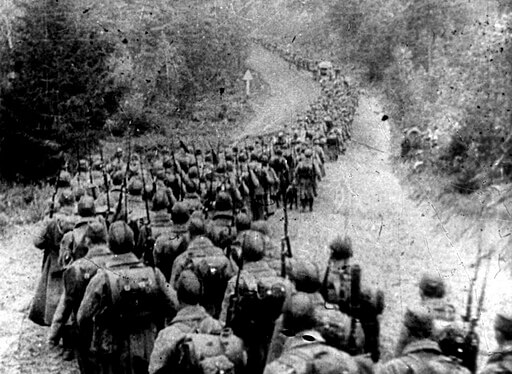
Source: Anonymous, Unknown author, Public domain, via Wikimedia Commons
Despite having declared that Britain would aid Poland if it were attacked by Germany, it became clear that Prime Minister Neville Chamberlain’s policy of appeasement had failed to deter Hitler.
Two days after the invasion, Britain declared war on Germany, though practical assistance to Poland during the September Campaign was limited.
Poland’s occupation was brutal and oppressive. The Germans implemented the “General Government” in their occupied Polish territories, subjecting Poles to severe persecution.
Similarly, the Soviets implemented harsh policies, deporting many Poles to Siberia and other remote regions.
The Polish Resistance Movement and the Holocaust
Despite the overwhelming odds, the Polish people actively resisted their occupiers.
The Home Army, the dominant force in the Polish resistance, launched various sabotage and intelligence operations against the Germans.
A Polish infantry brigade was used by the British during Operation Market Garden in an effort to advance into Germany.

Source: Bridge B (F/O), Royal Air Force official photographer, Public domain, via Wikimedia Commons
The war against Germany was difficult and the Polish underground state constantly fought against the German troops.
The German invasion during World War II also marked the horror of the Holocaust, where six million Jews, half of them Polish, were systematically murdered by the Nazis.
Poland was the main stage of this genocide, with major death camps like Auschwitz and Treblinka located on Polish soil.
Today, Auschwitz stands as a museum, and testament to what occurred during World War II and is one of the most visited places from Krakow.
Revolts against this genocide included the Warsaw Ghetto Uprising, where resistance was against massive deportations of Jews to the Treblinka death camp.
Nearly 5,000 Jews were being deported from the ghetto daily.
However, despite heroic and persistent resistance by the Jews in the Warsaw ghetto, German forces defeated the Jews through weapons, smoke bombs, flooding, and the burning of the ghetto.
Liberation by Allied Forces and the Aftermath of World War II
The liberation of Poland began with the Soviet Union’s offensive in 1944.
However, the end of Nazi occupation was not the beginning of freedom for Poland, as the country came under Soviet influence.
The aftermath of World War II was a time of massive change for Poland.
The borders were shifted westwards, significant population transfers occurred, and a new political order was established.
HOW MANY TIMES HAS POLAND BEEN INVADED
Cold War in Poland: Post WWII Period and Soviet Influence (1945 – 1989)
Establishment of the Polish People’s Republic under Soviet Influence
After the end of World War II, Poland became a communist state under the influence of the Soviet Union.
The Polish People’s Republic was established, marking the start of over four decades of communist rule.
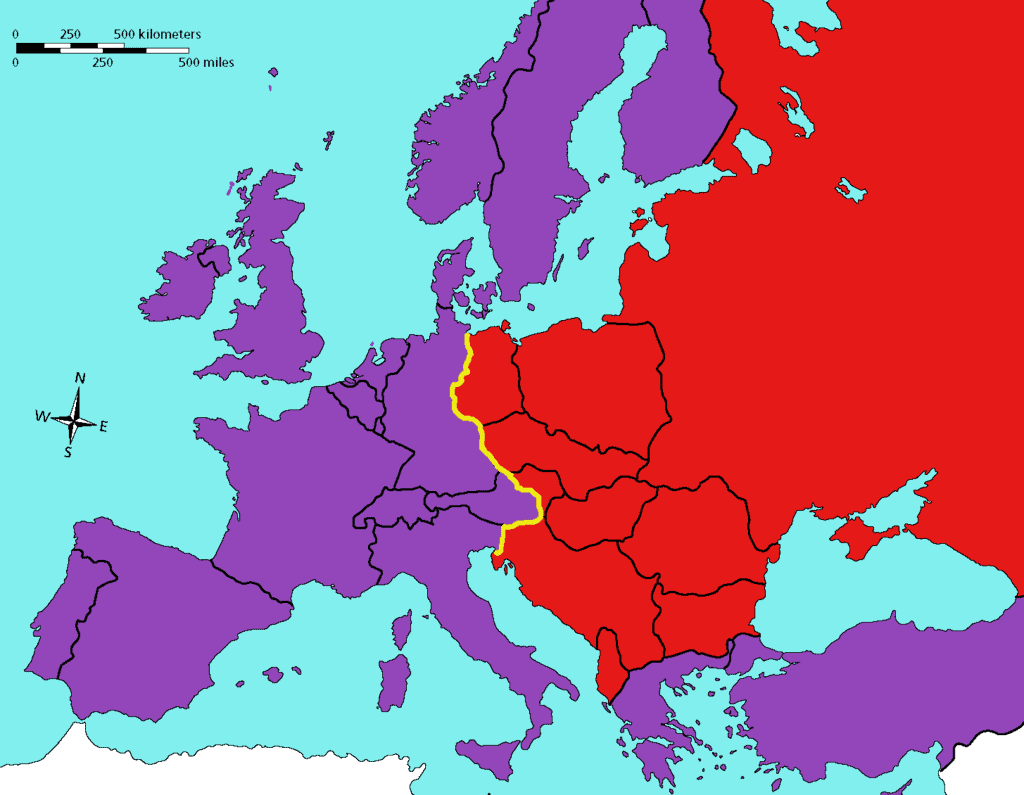
Source: BigSteve, CC BY-SA 3.0 , via Wikimedia Commons
Despite being a sovereign state in name, Poland was heavily influenced by the Soviet Union in all major aspects, including its political, economic, and foreign policies.
Poland was essentially a Soviet satellite state.
This period was marked by political repression, economic hardship, and the suppression of Polish culture and traditions.
Poland’s Resistance and Solidarity Movement
Resistance to communist rule in Poland was persistent and widespread. The most famous manifestation of this resistance was the Solidarity movement, led by Lech Wałęsa.
This independent trade union became a symbol of resistance to communist rule, not just in Poland but across Eastern Europe.
Despite significant state repression, including the imposition of martial law in 1981, the Solidarity movement persisted.
It played a crucial role in the negotiations that led to the semi-free elections of 1989, marking the beginning of the end of communist rule in Poland.
Fall of the Soviet Union and Poland’s Path to Freedom
The collapse of the Soviet Union at the end of 1989 marked a significant turning point for Poland.
As Soviet influence waned, Poland embarked on a path to freedom and democracy.
The Round Table Talks between the communist government and the opposition, largely represented by the Solidarity movement, led to semi-free elections.
These elections resulted in a landslide victory for Solidarity, and the peaceful transition to democracy began.
The 1990s and beyond saw a transformation of Poland as it embraced its new-found freedom.
The country embarked on a path of economic and political reforms, leading to significant growth and development.
In 1999, Poland joined NATO, and in 2004, it became a member of the European Union, marking its firm reintegration into the Western world after decades of Soviet influence.
HOW MANY TIMES HAS POLAND BEEN INVADED
Invasion of Poland Summary: How many times has Poland been taken over?
Poland’s history is a testament to the resilience of its people.
Despite numerous invasions and periods of foreign rule, the Polish nation endured in the end.
From the Mongol invasions of the 13th century to the partitions of the late 18th century, from the devastation of the two world wars to the challenges of the communist era, Poland has been invaded several times.
Wars of Poland: Impact on Poland’s National Identity and Culture
The many invasions and occupations that Poland has faced over the centuries have significantly shaped its national identity and culture.
Each period of struggle infused the Polish identity with a strong sense of resilience, patriotism, and an unyielding desire for freedom.
This has manifested itself in various ways, from the resistance movements during the world wars to the Solidarity movement in the 1980s.
The nation’s survival and eventual resurgence are a tribute to the determination and tenacity of the Polish people.
Poland’s rich culture, with its unique traditions, language, and values, has also been influenced by its tumultuous history.
Poland’s Place in the Modern World
Today, Poland stands as a proud and sovereign nation in the heart of Europe.
It is a member of the European Union and NATO, playing an active role in international affairs.
The journey to this point was not easy, and it was marked by countless hardships and struggles.
But it has also forged a people known for their resilience and a nation that values its hard-fought freedom.
Poland’s history is a poignant reminder of the power of determination and endurance.
HOW MANY TIMES HAS POLAND BEEN INVADED
FAQ’s: Invasions of Poland
Why Did Germany Invade Poland?
Germany invaded Poland in 1939 to initiate its policy of territorial expansion as dictated by Hitler’s concept of Lebensraum (“living space”).
Hitler believed that to ensure the survival and growth of the German race, additional territory was required, especially the fertile lands to the east in Poland and Russia.
The Treaty of Versailles, which ended World War I, had given a significant portion of Germany’s territory to Poland, including the “Polish Corridor” and the Free City of Danzig.
This was said to have created resentment among the Germans.
Furthermore, Nazi racial ideology regarded Slavic people, including Poles, as racially inferior, and saw their lands as rightfully belonging to the German race.
Poland’s refusal to accede to Germany’s demands, including the return of the city of Danzig to Germany, and the construction of an extraterritorial highway through the Polish Corridor, gave Hitler the pretext to launch an attack, marking the start of World War II.
Another factor was that Hitler was emboldened by the lack of strong action from Britain and France after the annexation of Austria and Sudetenland.
Also, the Molotov-Ribbentrop Pact signed with the Soviet Union a week before the invasion ensured the Soviets would not interfere, further facilitating the German plan.
How many countries have taken over Poland?
Poland has been occupied or partitioned by several countries, most notably by Russia, Prussia, and Austria in the late 18th century during the partitions of Poland, and by Germany and the Soviet Union during the 20th century.
How many times was Poland invaded by Russia?
Poland has been invaded by Russia multiple times, most notably during the Polish-Russian Wars of the 17th century, the partitions of Poland in the 18th century, and World War II in the 20th century.
What countries tried to invade Poland?
Over the centuries, many countries and entities have attempted to invade Poland, including but not limited to the Teutonic Knights, Sweden, Russia, Prussia, Austria, Germany, and the Soviet Union.
How many times has Poland been annexed?
Poland has been annexed several times, notably during the partitions of Poland in the late 18th century, and during World War II when it was divided between Nazi Germany and the Soviet Union.
How many wars has Poland been in?
Poland has been involved in numerous wars throughout its history, ranging from internal conflicts, defensive wars, and participation in major global conflicts like the two World Wars.
Has Poland ever invaded another country?
Yes, Poland has engaged in offensive military operations, such as during the Polish-Soviet War (1919–1921), when Poland took offensive actions against the nascent Soviet Union.
How many wars has Poland won?
Poland has had several military successes, such as the Battle of Vienna in 1683 and the Polish-Soviet War in 1920. However, quantifying “wins” can be complex due to the varying definitions of victory.
Why is Poland always invaded?
Poland’s geographic location between powerful entities like Germany and Russia has made it a frequent battleground throughout history. Its flat terrain offers few natural defensive barriers, making it susceptible to invasions.
Final Thoughts: How Many Times Has Poland Been Invaded
Before its implementation as a country, Poland’s lands were invaded several times over centuries.
After its establishment, there were a number of invasions, battles, wars and foreign issues on Polish soil.
At least six major invasions have made it in to the record books as significant enough that it has caused a major mark on Poland’s history.
This is largely in part to Poland’s geographical position.
At the crossroads of Europe, its location has subjected it to numerous invasions, occupations, and partitions.
Coupled with a predominantly flat terrain, Poland has been in the path of invading armies from both the east and west.
Major powers such as Russia, Prussia, Austria, Nazi Germany, and the Soviet Union have all left their mark on the country, sometimes erasing Poland from the political map altogether, as happened during the period of partitions in the late 18th century.
Yet Polish people have shown remarkable resilience.
The Polish resistance movement during World War II and the victories of the Polish army in battles such as the Battle of Warsaw in 1920 bear testimony to this.
While Poland has also participated in invasions, it is the repeated invasions by others that predominantly define its war history.
Join the
Poland Travel Group
Facebook Community
With nearly 7k members sharing everything there is to know about Poland
READ MORE POSTS ABOUT TRAVEL, CULTURE AND FACTS IN POLAND
- Best Krakow to Auschwitz Tours
- Best Tours to Auschwitz from Warsaw You Can’t Miss
- What is Poland Famous For: Amazing Things Poland is Known For
- Krakow to Auschwitz: A Complete Guide
- How to buy PKP Intercity Tickets Online
- Best Polish Vodka from Poland-Your Complete Guide to Polish Vodka Brands
- Best cities in Poland to Visit
- Summer in Poland: Discover the Best Places to Visit
- The National Flower of Poland: Exploring the Significance of the Red Poppy
- Poland National Animal: An Intriguing Backstory
- Good Morning in Polish & Useful Polish Phrases
- Drinking Age in Poland: Insider Tips for a Smooth Experience

